

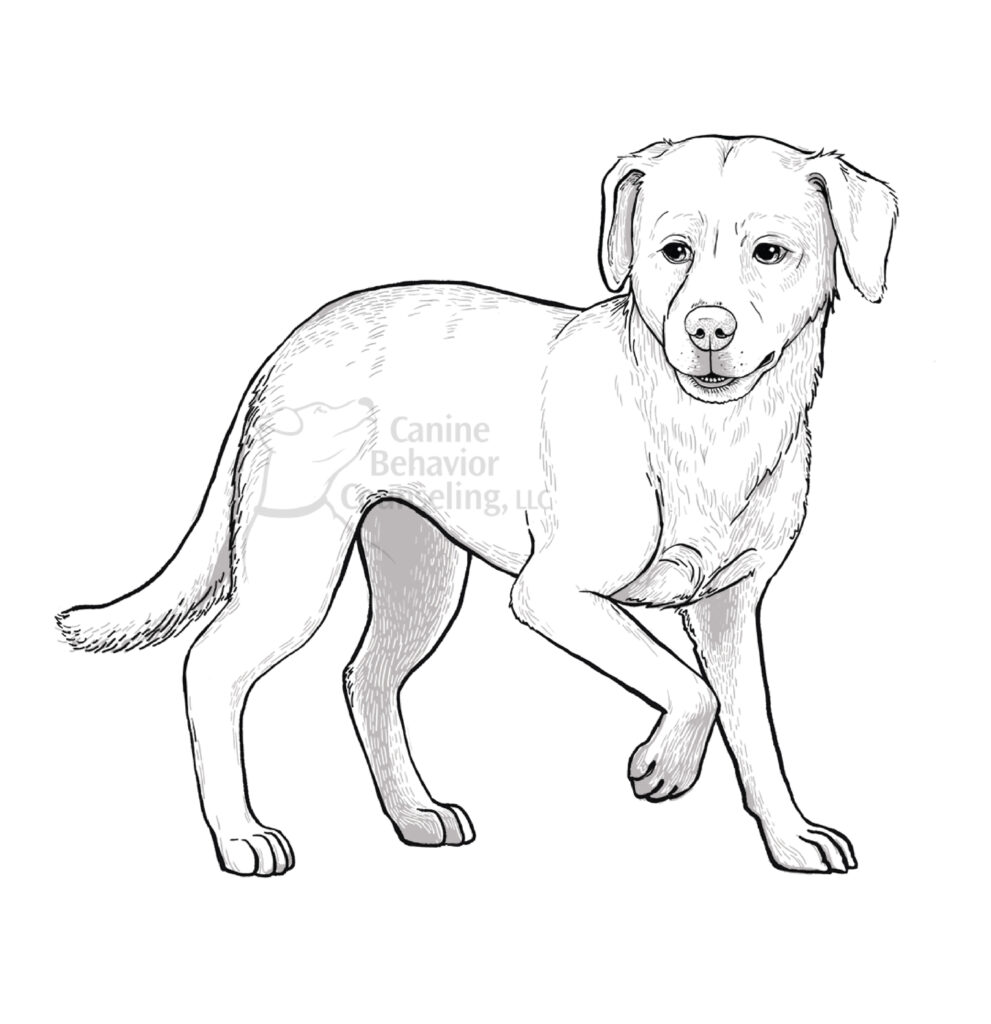
Understanding Why Some Dogs Struggle with Unfamiliar Dogs
One of the biggest misconceptions in the dog world is the belief that a dog who hesitates to greet another dog is antisocial. In reality, many dogs who struggle with greetings are not aggressive, reactive, or unfriendly at all. They’re simply emotionally sensitive.
These dogs often enjoy canine companionship, but they need time, distance, and trust before they feel comfortable engaging with an unfamiliar dog. Unfortunately, modern dog culture tends to encourage the opposite. We often assume dogs should happily greet every dog they encounter on walks, at daycare, in puppy classes, or at the local park.
But what if your dog’s behavior is telling a different story?
The Dog Who Says “I’m Not Ready Yet”
Imagine your dog spots an unfamiliar dog approaching. Instead of charging forward with enthusiasm, your dog:
- Turns their head away
- Sniffs the ground
- Raises a paw
- Stress yawns
- Curves their body tightly
- Pauses or hesitates
- Looks and then looks away
Many people mistakenly interpret these behaviors as stubbornness, disobedience, or lack of socialization. I see something different.
On the Moore S.C.A.L.E.™, these dogs often fall around a -2 (Cautious) or -1 (Curious). They are gathering information and trying to determine whether the interaction feels safe. They are communicating: “I might be interested, but I need more time.”
The question we should ask is not: “Why won’t my dog say hello?”
The better question is: “Is this type of greeting actually healthy for my dog?”
When we repeatedly push emotionally sensitive dogs into close greetings before they are ready, we often create the very reactivity we are trying to prevent.
The Dog Who Says “Yes” Too Quickly
Not all greeting struggles come from hesitation. Some dogs rush toward every dog they meet. These dogs may appear social because they are eager to engage. Their tails are wagging, their movement is fast, and their enthusiasm seems friendly. But excitement and social skill are not the same thing.
On the Moore S.C.A.L.E.™, these dogs often begin around +2 (Excited) and quickly escalate toward +3 (Rude or Persistent).
They may:
- Rush directly into another dog’s space
- Ignore calming signals
- Continue pursuing after the other dog disengages
- Place their head over another dog’s shoulders
- Repeatedly demand interaction
- Become frustrated when access is denied
From a human perspective, these dogs often look “friendly.” From the other dog’s perspective, they can be exhausting. Many conflicts begin not because a dog is aggressive, but because one dog is ignoring the social boundaries of another.
When Sensitive Dogs Meet the Wrong Partners
One of the most interesting patterns I see involves emotionally sensitive, dog-selective dogs.
These dogs often confuse their owners. During greetings, they may appear soft, cautious, and even submissive. Yet minutes later they become pushy, rough, vocal, or controlling during play. Owners often ask: “What happened?”
The answer is usually emotional regulation. The dog wasn’t truly relaxed in the first place. They were uncertain.
As arousal rises, uncertainty can transform into overcompensation. The dog begins managing their discomfort through controlling behavior, excessive play pressure, body slams, chasing, barking, or corrections that seem disproportionate to the situation. They’re not trying to be mean.
They’re struggling to stay regulated.
What the Right Dog Reveals
One of the fastest ways to understand a dog’s social skills is to observe them with different types of canine partners. Some dogs reveal their insecurities around passive dogs.
Others reveal their best selves around confident dogs with clear boundaries. A calm, socially skilled dog often communicates:
“You don’t have to worry. I understand dog language.” A confident boundary-setting dog communicates:
“You are welcome here, but you still need manners.”
These interactions often allow emotionally sensitive dogs to relax, trust, and communicate more appropriately. Suddenly the dog who seemed reactive, rude, or socially awkward begins demonstrating remarkable social skills.
Nothing about the dog changed. The social environment changed.
Why Daycare Isn’t Always the Answer
Many emotionally sensitive dogs struggle in daycare, dog parks, and large pack walks.
Not because they dislike dogs. Because there is simply too much social pressure to be able to process information.
These dogs may:
- Stay on the perimeter
- Hover near humans
- Avoid active play groups
- Bark when overwhelmed
- Alternate between avoidance and over-arousal
- Become increasingly reactive over time
Repeated exposure to large groups rarely teaches social confidence. In many cases, it teaches dogs that unfamiliar dogs are unpredictable and stressful.
The Life Many Sensitive Dogs Actually Want
The happiest social life for an emotionally sensitive dog is often surprisingly simple. They don’t need twenty dog friends.
They may only need one or two.
A few compatible companions can provide:
- Trust
- Predictability
- Emotional safety
- Healthy play
- Clear communication
- Appropriate boundaries
Quality matters far more than quantity. When we stop measuring success by how many dogs our dog can greet and start measuring success by how comfortable our dog feels, everything changes.
A Final Thought
The next time your dog hesitates, sniffs the ground, turns away, or raises a paw when another dog approaches, resist the urge to encourage the greeting.
Pause and observe. Your dog may not be saying: “I don’t like dogs.”
They may simply be saying: “I need a little more time.”
And sometimes, the greatest gift we can give our dogs is the space they need to be heard.
This concept is explored in greater depth in my new book, The Space Between Dogs, where I introduce the Moore S.C.A.L.E.™ and the Let’s Talk Process™—a framework designed to help owners better understand canine communication, emotional regulation, and healthy dog-to-dog socialization.
Ready to continue your learning journey?
Explore video demonstrations, downloadable guides, and practical tools designed to help you better understand canine communication and social confidence.